
Jewish Hats as Branded Merchandise: What Australian Organisations Need to Know
Discover how Jewish hats can work as meaningful branded merchandise for Australian organisations, schools, and corporate events in 2026.

Written by
Dane Holloway
Custom Apparel
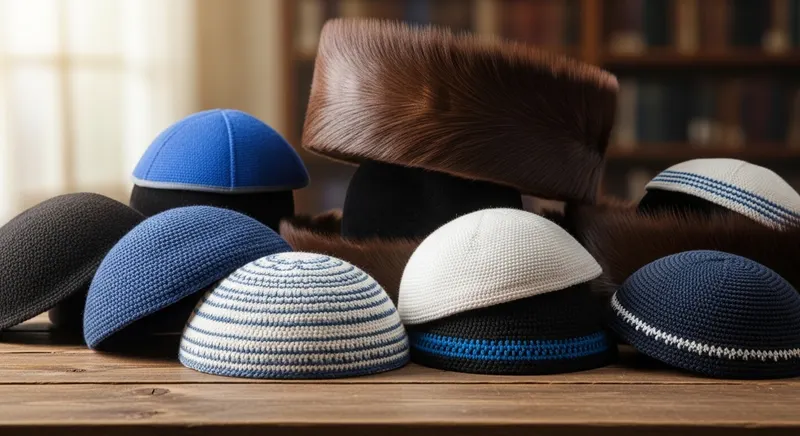
Branded headwear is one of the most versatile and visible categories in promotional merchandise — a well-chosen hat puts your logo in front of dozens of people every single day. But when it comes to sourcing Jewish hats for cultural events, school programs, interfaith community initiatives, or corporate diversity projects, there are some important considerations that go well beyond simply picking a style and adding a logo. Whether you’re a Sydney-based school organising a multicultural awareness week, a Melbourne corporate team looking to support a Jewish community partner, or a Brisbane event coordinator sourcing respectful headwear for a cultural celebration, this guide will walk you through everything you need to know.
Understanding Jewish Hats and Their Cultural Significance
Before jumping into decoration methods and minimum order quantities, it’s worth understanding what the term “Jewish hats” actually encompasses. Jewish headwear has deep religious and cultural meaning, and the items most commonly associated with Jewish tradition include:
The Kippah (Yarmulke)
The kippah (also spelled yarmulke) is the small, rounded head covering worn by Jewish men and boys, particularly during prayer, religious study, and in many communities, throughout daily life. Kippahs are typically made from suede, velvet, knitted fabric, or leather, and they range in size from a few centimetres to larger styles that cover more of the head. Suede and velvet kippahs are common in Orthodox communities, while knitted (or crocheted) styles are popular in Modern Orthodox and traditional communities.
The Fedora and Wide-Brimmed Hat
In Hasidic and Haredi communities, a black wide-brimmed fedora or homburg hat is worn as part of a distinctive community dress code. These hats have become strongly associated with observant Jewish men in countries including Australia, the United States, and Israel.
The Shtreimel
The shtreimel is a large, fur-trimmed hat worn by married men in certain Hasidic communities, particularly on Shabbat and Jewish holidays. These are highly specialised ceremonial items, not typically sourced through standard promotional product channels.
Understanding these distinctions matters enormously when you’re working with a Jewish community organisation, a Jewish school, or a corporate client who supports Jewish causes. Treating these items with appropriate care and cultural respect is the foundation of any good merchandise project involving religious headwear.
When Would an Australian Organisation Need Jewish Hats?
This is a more practical question than it might first appear. There are several legitimate, respectful contexts in which Australian businesses, schools, and organisations might source Jewish hats as part of a broader merchandise or event project.
Jewish Schools and Educational Institutions
Australia has a significant and well-established Jewish community, particularly in Melbourne and Sydney. Jewish day schools often source kippahs in bulk — sometimes featuring school colours, embroidered logos, or other customisation — for use by students during prayers, assemblies, and school events. A Melbourne Jewish school might order several hundred navy suede kippahs with a small embroidered school crest, for example.
If you’re involved in procurement for a Jewish school, this falls squarely within the scope of personalised promotional products and branded merchandise that a reputable promotional products supplier can assist with.
Cultural Awareness and Multicultural Events
Schools running interfaith education programs or multicultural weeks sometimes source representative headwear from various cultural traditions as educational props or gifts. In these cases, generic or representative kippahs might be ordered in small quantities alongside other culturally significant items. Approaching this with genuine respect and consultation with the relevant community is essential.
Synagogues and Jewish Community Organisations
Synagogues frequently provide kippahs to guests who do not own their own, particularly for lifecycle events like bar mitzvahs, bat mitzvahs, weddings, and High Holy Day services. These kippahs are often branded or personalised with the name of the event, the date, and the hosting family or synagogue. This is a meaningful and well-established use of custom headwear within the Jewish community.
Corporate Diversity and Inclusion Initiatives
Large Australian corporations with active diversity and inclusion programs sometimes source culturally significant items as part of awareness gifting or event packs. Working closely with Jewish community liaisons to ensure appropriateness is critical in these scenarios. For broader corporate gifting ideas, exploring promotional products for business is a great starting point.
Customisation Options for Kippahs and Jewish Headwear
When it comes to customisation, kippahs lend themselves well to a few key decoration methods.
Embroidery
For fabric kippahs — whether suede, velvet, or knitted — embroidery is the most traditional and durable decoration method. A small school crest, a name, a date, or a simple monogram can be embroidered onto the interior lining or on the outer surface of suede styles. Embroidery gives a premium, tactile finish that holds up to regular wear and washing.
Printed Lining
Many suppliers who specialise in kippahs offer the option of a custom-printed fabric lining on the inside of the hat. This is a popular choice for bar mitzvah and wedding kippahs, where the family name, date, and a small decorative motif are printed neatly on the inner surface.
Custom Fabric and Colour
For knitted or suede kippahs, ordering in a custom colour to match a school uniform, sporting club palette, or organisational brand is often achievable with sufficient quantities. Minimum order quantities (MOQs) for custom-colour kippahs from specialist suppliers typically start from around 50–100 units, though standard colours can be ordered in smaller runs.
Practical Ordering Tips for Australian Organisations
Sourcing kippahs or other Jewish headwear through a promotional products supplier requires some additional planning compared to standard branded caps or beanies. Here’s what to keep in mind.
Work With Specialists Where Possible
Not every general promotional company will have Jewish headwear in their catalogue. It’s worth checking with suppliers who have experience working with the Jewish community or who can source from specialist manufacturers. Specialist Judaica suppliers in Melbourne and Sydney often produce kippahs domestically or import from Israel, the United States, or Europe.
If you’re sourcing through a general promotional products company, ask specifically about their sourcing capacity and whether they can obtain samples before committing to a full run. You can also explore broader Australian promotional product options to find suppliers with diverse headwear catalogues.
Allow Adequate Lead Time
Custom kippahs — especially those with embroidery or custom-printed linings — typically require 3–6 weeks from artwork approval to delivery. If you’re ordering for a bar mitzvah, school event, or High Holy Day program with a fixed date, build in extra time. Last-minute orders are rarely possible for fully customised religious items.
Artwork Requirements
For embroidered kippahs, your artwork should be provided as a high-resolution vector file (AI, EPS, or PDF). The embroidery area on a standard kippah is quite small, so designs need to be simplified to hold up at a reduced size. Fine details and thin lines may not embroider cleanly at this scale. Your supplier should provide a digital proof and, ideally, a physical embroidery sample before full production begins.
Budget Considerations
Plain suede or velvet kippahs can be sourced in bulk from around $2–$5 per unit at high volumes, though custom-decorated or premium styles will naturally be higher. For personalised wedding or event kippahs with custom printed linings, expect to pay $5–$12 per unit depending on quantities and complexity. For context on how to budget across broader merchandise projects, our overview of merchandising products covers budget tiers and buying strategies in detail.
Pairing Jewish Hats With Broader Event Merchandise
If you’re organising a Jewish community event, a school gala, a fundraiser, or a corporate cultural awareness program, kippahs rarely stand alone as the only branded item. Consider pairing them with complementary merchandise for a more cohesive event experience.
Some popular pairings include:
- Custom tote bags — perfect for carrying event programs, gifts, and essentials. Great for synagogue fundraisers or school events. Learn more about building out a complete gift pack in our guide to everything branded in Australia.
- Branded notebooks and pens — ideal for corporate events and school programs. Stationery is always a practical inclusion.
- Custom water bottles or keep cups — practical, well-received, and suitable for all ages at community events.
- Branded polo shirts or event T-shirts — for school or community teams involved in running the event. Our guide to work polo shirts covers decoration options and fabric choices in detail.
- Eco-friendly promotional items — bamboo products, recycled tote bags, or reusable drinkware are increasingly popular with community organisations looking to reduce environmental impact. Browse our environmentally friendly promotional products guide for inspiration.
For events in warmer Australian cities like Brisbane, Perth, or the Gold Coast, adding SPF50 sunscreen to event gift packs is always a thoughtful, practical touch.
Finding the Right Supplier in Australia
Sourcing kippahs and Jewish headwear in Australia requires a bit more legwork than ordering standard caps, but it’s absolutely achievable with the right supplier network. Start by reaching out to promotional product specialists who have experience with cultural and religious merchandise, and don’t hesitate to ask for references or examples of previous orders in this space.
It’s also worth checking whether your supplier can offer a promotional products logo service that includes proofing on small, curved surfaces — this is important for kippahs where the canvas is small and curved. If you’re in regional Australia, suppliers serving Newcastle and regional NSW can also be a great resource. For year-round gifting programs that include culturally significant items, Christmas and employee gift ideas guides can provide useful context around gift planning timelines.
Conclusion: Key Takeaways for Ordering Jewish Hats as Branded Merchandise
Sourcing Jewish hats — particularly kippahs — as branded merchandise is a meaningful and achievable project for Australian schools, synagogues, community organisations, and corporate teams. Done respectfully and thoughtfully, customised Jewish headwear can be a beautiful, lasting keepsake for lifecycle events, school programs, and cultural celebrations.
Here are the key points to remember:
- Understand the cultural context — kippahs, wide-brimmed fedoras, and ceremonial hats each have distinct meanings and appropriate use cases. Research before ordering.
- Choose the right decoration method — embroidery and custom-printed linings are the most suitable and respectful options for kippah customisation.
- Plan ahead — allow 3–6 weeks for custom orders, especially for events with fixed dates like bar mitzvahs or school ceremonies.
- Work with experienced suppliers — not all general promotional product suppliers stock or source Jewish headwear. Seek out specialists or suppliers with proven experience in this category.
- Pair with complementary merchandise — kippahs work well as part of a broader event merchandise suite that might include bags, stationery, drinkware, and eco-friendly items for a cohesive and memorable experience.